
22 BEST THINGS TO DO IN MOBILE, ALABAMA (A LOCAL’S GUIDE)
Updated May 2026
The three things to know before you go: Mardi Gras started in Mobile in 1703, fifteen years before New Orleans existed. The modern shipping container was invented here. And you can walk the entire historic downtown in an afternoon. Mobile rewards visitors who know where to look, and after years of walking these streets with travelers from all over the world, here’s exactly where I’d send you.
We have three goals on every Bienville Bites tour: Coastal, Celebrate, Cuisine. This list is built the same way. You’ll learn what makes this corner of the Gulf Coast unlike anywhere else, you’ll have a genuinely good time, and you’ll eat extremely well along the way.
1. Take a Downtown Food Tour (Start Here)
A food tour is the fastest way to understand a city. You eat the history, meet the people who cook it, and walk the neighborhoods all at once. Our Downtown Mobile Food Tour stops at seven restaurants and shops over three hours through the Lower Dauphin Street Historic District, and it ends with the best beignets on the Gulf Coast. Whether you book with us or not, do a food tour on day one. Everything else on this list hits differently once you understand what’s on the plate.
2. Tour the USS Alabama Battleship
The “Mighty A” earned nine Battle Stars in World War II and now sits permanently docked at Battleship Memorial Park, alongside the USS Drum submarine and a collection of military aircraft. Here’s the local connection most guides skip: World War II shipbuilding exploded Mobile’s population and pulled workers in from all over the country, reshaping the city you see today. Budget two to three hours. It’s Mobile’s number one attraction for good reason.
3. Stand in Bienville Square
Downtown’s green centerpiece, named for Mobile’s founder, Jean-Baptiste Le Moyne, Sieur de Bienville. Some of the live oaks here are said to be over 200 years old. When Mobile became an American city, Congress handed over this land, the old Spanish Hospital plot, on the condition that it be used forever as a public park. The central fountain, placed in 1890, honors Dr. George Ketchum, who brought safe drinking water to the city. (Fair warning: the squirrels here are aggressively well-fed, thanks to the peanut shop a block away.)
4. Visit the Mobile Carnival Museum
Mobile is the birthplace of Mardi Gras in America, and this museum tells that story through preserved gowns, elaborate crowns, and the history of the mystic societies that parade here. If you only learn one piece of Mobile history, make it this one: our first Mardi Gras celebration likely happened in a tavern in 1703.
5. Walk Dauphin Street
Mobile’s main commercial corridor for three centuries. The street was named by Bienville himself for the son of Louis XIV. By the 1830s, Dauphin Street had such a reputation for quality that the phrase “like walkin’ down Dauphin Street” meant anything of exceptional quality. Walk it by day for the architecture, by night for the music and cocktails.
6. See the Van Antwerp Building
This ten-story building at the corner of Dauphin and Royal was Alabama’s first skyscraper, and the first on the entire Gulf Coast, when ground broke in 1906. Druggist Garrett Van Antwerp’s drugstore dominated the ground floor, complete with a 53-foot white marble soda fountain billed as the finest in the United States. The building was a one-stop shop: a man could get a bad prognosis from his doctor upstairs, a strong milkshake at the soda fountain, his clothes dry-cleaned, a prescription filled, flowers for his wife, and a taxi home, all under one roof. Restored by the Retirement Systems of Alabama, its terra-cotta cornice is once again one of downtown’s landmarks.
7. Stay (or Gawk) at the Battle House Hotel
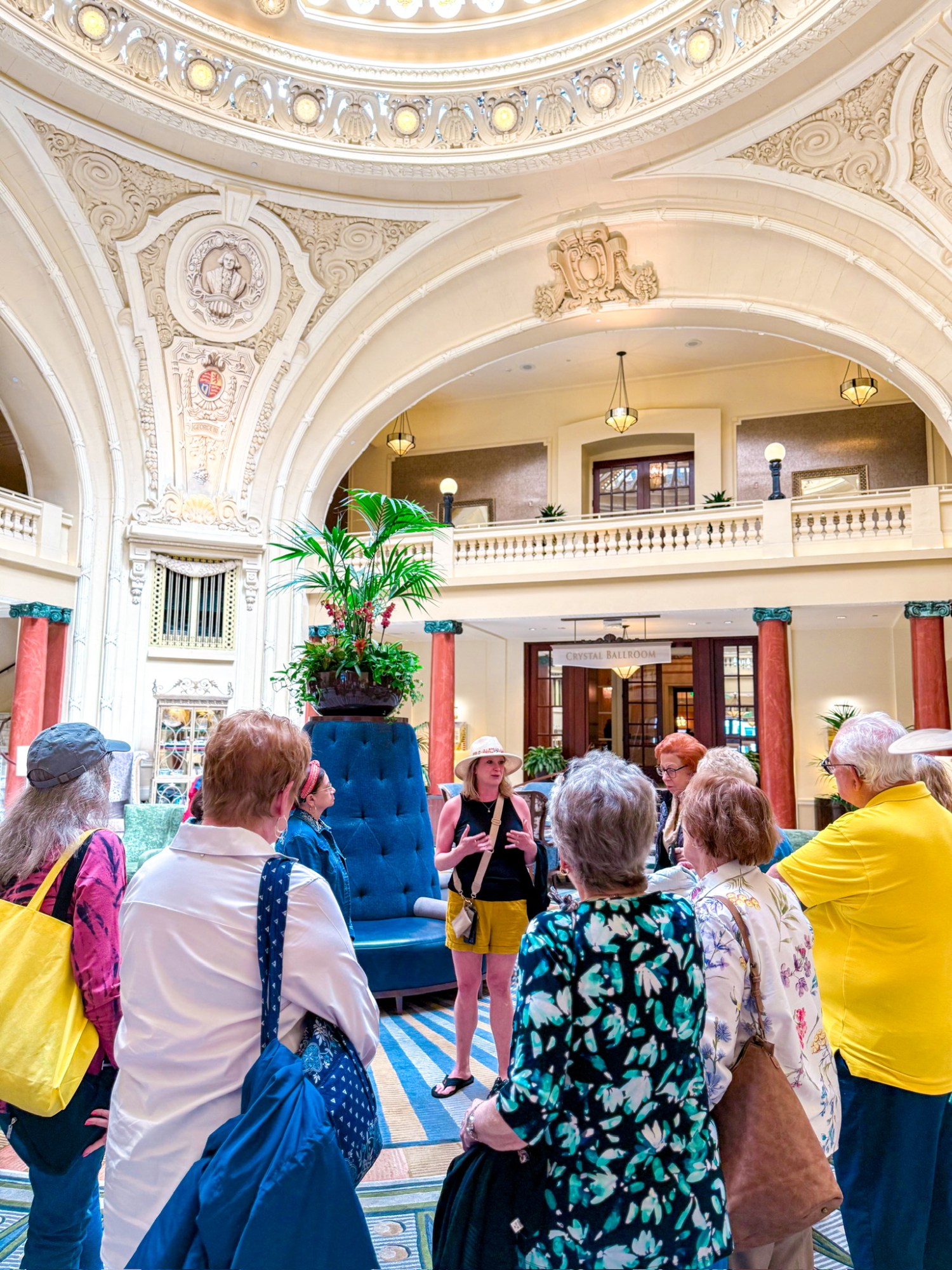
Recently named the Best Historic Hotel in the United States by Historic Hotels of America. It’s named for the three Battle brothers who built a hotel here in 1852, on the same site Andrew Jackson used as his headquarters during the War of 1812. More U.S. presidents have stayed here than at any other hotel in the state. Stephen Douglas spent the night here on the eve of losing the 1860 presidential election to Abraham Lincoln. The current building dates to 1908, after the original burned in 1905.
8. Find the World’s Largest Electronic Moon Pie
At the RSA BankTrust Building hangs the World’s Largest Electronic Moon Pie, and every New Year’s Eve, Mobile drops it to ring in the year with a giant street party downtown. Mobile and the moon pie are practically synonymous. Locals consume an estimated four million each year. They’re baked in Chattanooga, but Mobile is the test market for new flavors like coconut and lime, so consider this your civic duty.
9. Visit Africatown Heritage House
The Clotilda was the last slave ship to arrive in the United States, in 1860, more than 50 years after the international slave trade was outlawed. Its survivors founded Africatown, a community that still exists today. The Heritage House exhibition displays recovered pieces of the ship and tells the story of the people aboard. It is one of the most important cultural exhibitions in the country. Set aside real time for it.
10. Stroll Cathedral Square & the Basilica
In the shadow of the Cathedral of the Immaculate Conception, this square sits where Dauphin Street once ended at the old Campo Santo cemetery. The first Catholic congregation in Alabama formed at Mobile’s original site on 27 Mile Bluff in 1703, making it the oldest religious congregation in the state. The cathedral was finished in 1850, when it was the tallest building in Mobile. Bishop Portier, who built it, is buried in the crypt beneath. The square hosts Market in the Square, ArtWalk, and events all year.
11. Catch a Show at the Saenger Theatre
A restored 1927 movie palace with French and Italian Renaissance details, now hosting Broadway tours, concerts, and comedians throughout the year. Check the schedule whenever you’re in town.
12. Tour Bellingrath Gardens and Home
Sixty-five acres of lush gardens, a historic home, and views over the Fowl River, about a half hour from downtown. Visit in spring to catch the azaleas in full bloom. Mobile isn’t called the Azalea City for nothing.
13. Explore the History Museum of Mobile
Housed in the old city hall, the museum carries you from Native American history through French colonial rule, the cotton era, the Civil War, and Mardi Gras. Mobile flew under six flags, and this is the best single place to make sense of all of them.
14. Step Inside Fort Condé
A reconstruction of the early-1700s French fort that once guarded the settlement, with reenactors and exhibits on Mobile’s colonial era. Bienville actually relocated the settlement here in 1711 after flooding ruined the original site on 27 Mile Bluff.
15. Eat Oysters at Wintzell’s
J. Oliver Wintzell opened this oyster house in 1938 as a six-stool oyster bar, in the middle of the Great Depression. His logic: people on the Gulf Coast eat oysters in good times and bad, and back then they were 15 cents a dozen. His hand-painted one-liners still cover the walls. Order them fried, stewed, or nude.
16. Smell (Then Visit) the A&M Peanut Shop
You’ll smell it a block before you see it. The roaster inside has been running for over a century, and the shop opened in 1947 as part of the Planters Peanut chain before the original manager bought it and named it for himself and his wife, Mary, hence A&M. Grab roasted peanuts, pecans, and cashews. (Yes, this is the source of those well-fed Bienville Square squirrels.)
17. Get Chocolate at Three George’s
Open in downtown Mobile since 1917, founded by three Greek immigrants all named George who couldn’t agree on whether to open a sandwich shop, a soda fountain, or a chocolate store, so their wives convinced them to do all three. Here’s the kicker: when Mobile native Winston Groom’s Forrest Gump was being filmed, Three George’s shipped chocolate-covered shrimp to the set for Tom Hanks and Sally Field. Get the fresh pralines.
18. Take in the View at Cooper Riverside Park
A relaxing spot on the Mobile River, perfect for a sunset. While you’re looking at the water, consider this: the shipping container was effectively invented right here. Malcolm McLean, who owned a Mobile trucking company and later the Waterman Steamship Co., had the idea to lift an entire truck trailer onto a ship rather than unload it crate by crate. That idea grew Mobile’s port into the tenth largest in the country.
19. Drive Through the Bankhead Tunnel
A 1940s tunnel under the Mobile River that’s a small local rite of passage, just make sure you’re under the height limit. It has a long history of, let’s say, “tall vehicle incidents.”
20. Wander the Oakleigh Historic District
Some of the most beautiful antebellum and Victorian homes in the South line these streets. The Oakleigh House Museum (1833) offers tours if you want to step inside.
21. Go to a Mardi Gras Parade
If you’re here between January and Fat Tuesday, go. Mobile’s Mardi Gras is older, more traditional, and more family-friendly than our better-known sister city’s, and the parades are free. Catch beads, moon pies, and doubloons, and see the celebration the way it started.
22. Take an Evening Food Tour
Different tour, different city. Our Old Mobile Evening Food Tour trades daytime history for cocktails, Gulf Coast classics, rooftop views, and a 1920s speakeasy vault. If you did the daytime tour earlier in your trip, this is how to close it out.
How to Spend Your Time in Mobile
One day: food tour, the battleship, and dinner on Dauphin Street. Two days: add the Carnival Museum and Africatown Heritage House. Three days: you genuinely can’t go wrong.
Ready to taste your way through Mobile?
Frequently Asked Questions
What are the top things to do in Mobile, Alabama?
The essentials are the USS Alabama Battleship, a downtown food tour, the Mobile Carnival Museum, Africatown Heritage House, and a walk down historic Dauphin Street. Mobile is also the birthplace of Mardi Gras in America, so a parade is a must if you visit during Carnival season.
How many days do you need in Mobile?
Two days is enough to see the highlights of downtown Mobile comfortably. One day covers the essentials (a food tour, the battleship, and dinner downtown), while three days lets you add day trips like Bellingrath Gardens and the Mobile-Tensaw Delta.
Is Mobile, Alabama worth visiting?
Yes. Mobile combines 300+ years of French, Spanish, British, and American history with Gulf Coast seafood, the original American Mardi Gras, and a walkable historic downtown, all with smaller crowds and lower prices than New Orleans.
What is Mobile, Alabama known for?
Mobile is known as the birthplace of Mardi Gras in America (first celebrated in 1703), its Gulf Coast seafood, the USS Alabama Battleship, and as the Azalea City for its spring blooms. It was also a major cotton port in the 19th century.
Free Download
Before You Go, Get the Free Guide
7 Iconic Mobile Dishes and the Surprising Stories Behind Them
Planning a trip to Mobile? Know exactly what to eat before you arrive. This free guide goes deep on the history behind seven dishes this city was built on, from the founder of Bienville Bites and author of A Culinary History of Mobile. Drop your email and it’s yours.
No spam, just good Mobile food stories. Unsubscribe anytime.
Written by Chris Andrews, founder of Bienville Bites Food Tour and author of A Culinary History of Mobile. Chris has guided thousands of visitors through downtown Mobile and knows every block, every building, and every good place to eat.