10 FREE THINGS TO DO IN MOBILE, ALABAMA (LOCAL’S GUIDE)
Updated May 2026
The short version: Some of the best things to do in Mobile, Alabama cost nothing at all. The city is 300+ years old, walkable, and packed with historic squares, free museums, riverfront sunsets, and (in season) America’s original Mardi Gras parades. Here are ten genuinely free things to do in Mobile, from a local who walks these streets for a living.
Mobile likes to call itself “born to celebrate,” and you don’t need to spend a dime to feel why. The historic district is genuinely beautiful, the squares are open to anyone, and the Mardi Gras parades, the original American Mardi Gras dating back to 1703, are completely free to attend. Here’s how to experience the city for free, from someone who shows it off for a living.
1. Walk Through Bienville Square
Downtown’s green centerpiece, named for Mobile’s founder, Jean-Baptiste Le Moyne, Sieur de Bienville. Some of the live oaks here are said to be over 200 years old. Congress gave this land to the city on the condition it remain a public park forever. The central fountain (1890) honors Dr. George Ketchum, who brought safe drinking water to Mobile, and Teddy Roosevelt once spoke here about the Panama Canal. Bring a coffee and sit a while. The squirrels, fattened by the peanut shop a block away, will keep you company.
2. Stroll Historic Dauphin Street
Mobile’s main commercial street for three centuries, named by Bienville for the son of King Louis XIV. By the 1830s it had such a reputation for quality that “like walkin’ down Dauphin Street” became local slang for anything excellent. Look up as you walk: the cast-iron balconies, the terra-cotta cornices, the 19th-century facades. It costs nothing and it’s one of the most beautiful streetscapes in the South.
3. Visit Cathedral Square
A public square in the shadow of the Cathedral of the Immaculate Conception. The cathedral, finished in 1850, was once the tallest building in Mobile, and you can step inside for free to see its German art glass windows and hand-carved Stations of the Cross. The square hosts free events all year, including Market in the Square and ArtWalk.
4. Catch a Sunset at Cooper Riverside Park
A free riverfront park on the Mobile River. Watch the working port in action: container ships, tugs, and often dolphins. While you’re there, consider that the modern shipping container was effectively born here, when Mobile’s Malcolm McLean had the idea to lift whole truck trailers onto ships. That idea grew Mobile’s port into the tenth-largest in the country. The sunset over the water is the free part.
5. See the World’s Largest Electronic Moon Pie
Hanging at the RSA BankTrust Building downtown is the World’s Largest Electronic Moon Pie, the one Mobile drops every New Year’s Eve. Mobile and the moon pie are practically synonymous; locals eat an estimated four million a year. It costs nothing to walk by and snap a photo, and it’s one of the most uniquely Mobile sights there is.
6. Walk the De Tonti Square and Church Street East Historic Districts
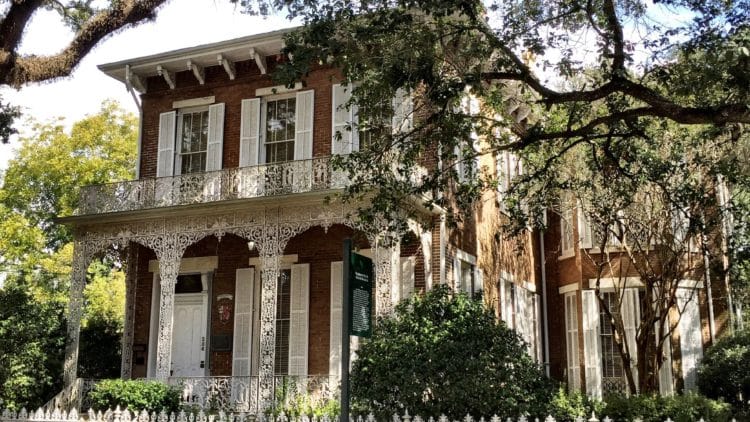
Two of Mobile’s seven nationally registered historic districts, full of antebellum and Victorian townhouses, cast-iron balconies, and brick streets. Self-guided walking is free, and these neighborhoods are quietly some of the most beautiful in the South. Look for the Joseph Silver House (1845) with its dramatic cast-iron stairway rising from the sidewalk.
7. Smell the A&M Peanut Shop
Okay, buying the peanuts costs a few bucks, but walking by to smell a roaster that has been running since the late 1800s is free, and it’s one of the great sensory experiences downtown. The aroma drifts a full block. The shop opened in 1947 as part of the Planters Peanut chain before the original manager, Alfred Gibson, bought it in 1963 and named it for himself and his wife Mary. The shop has its own deep history, including a connection to the 1863 Mobile Bread Riot that happened on that exact block. (We tell the full story in our A&M Peanut Shop deep dive.)
8. Go to a Mardi Gras Parade
This is the big one. Mobile is the birthplace of Mardi Gras in America (first celebrated in 1703, fifteen years before New Orleans even existed), and the parades are completely free. If you visit between January and Fat Tuesday, stake out a spot downtown and catch beads, moon pies, and doubloons thrown from the floats. Mobile’s Mardi Gras is more traditional and family-friendly than its better-known sister city’s, and it won’t cost you anything to be part of it.
9. Explore Fort Conde’s Exterior and Visitor Center
A reconstruction of the early-1700s French fort that guarded the original settlement. The visitor center and exterior are free to explore, with exhibits on Mobile’s colonial era. This is roughly where Bienville relocated the city in 1711 after flooding ruined the original site at 27 Mile Bluff. It is also where the Pelican Girls historical marker was unveiled in late 2025, honoring the twenty-three young Frenchwomen who arrived in 1704 and launched the Petticoat Rebellion two years later.
10. Window-Shop the Cathedral Square Arts District
The blocks around Cathedral Square form Mobile’s arts district, full of galleries, murals, and public art. Wandering and looking is free, and during the monthly LoDa ArtWalk, galleries open their doors at no charge with art, music, and street performances filling downtown.
Bonus: Almost-Free Mobile (Under $10)
If you’ve got a little flex in the budget, these add up to a great day with a few extra dollars in play:
A bag of peanuts at A&M. A few dollars. Take them to Bienville Square and feed the squirrels.
A moonpie at any gas station or corner store. Under $2 and quintessentially Mobile.
A coffee at Serda’s, Yellowhammer, or Greer’s. Under $5 and built for downtown people-watching.
A boiled peanut from a roadside stand. Possibly the most Alabama thing you can eat. A couple of dollars.
Also Free · And Genuinely Useful
A Free 15-Page Guide to Mobile’s Iconic Food
7 Iconic Mobile Dishes and the Surprising Stories Behind Them
While you’re walking these free spots, this free guide tells you what to eat at the restaurants you’ll pass and where to find them at the right price. Seven iconic Mobile dishes with the wild histories behind them, from the founder of Bienville Bites and author of A Culinary History of Mobile. Drop your email and it’s yours.
No spam, just good Mobile food stories. Unsubscribe anytime.
Frequently Asked Questions
What free things are there to do in Mobile, Alabama?
Free things to do in Mobile include walking through Bienville Square and Cathedral Square, strolling historic Dauphin Street, watching the sunset at Cooper Riverside Park, exploring the De Tonti and Church Street East historic districts, smelling the peanuts at the A&M Peanut Shop, visiting Fort Conde’s visitor center, and attending a Mardi Gras parade during Carnival season. Many of the city’s best experiences cost nothing.
Are Mobile’s Mardi Gras parades free?
Yes. Mobile’s Mardi Gras parades are completely free to attend. You simply find a spot along the downtown parade route and catch beads, moon pies, and doubloons thrown from the floats. Mobile is the birthplace of Mardi Gras in America, first celebrated in 1703.
What can you do in downtown Mobile without spending money?
Downtown Mobile is highly walkable and free to explore. You can tour the historic squares, walk Dauphin Street’s 19th-century streetscape, step inside the Cathedral Basilica, visit Fort Conde’s visitor center, smell the A&M Peanut Shop, and enjoy the riverfront, all at no cost.
Is Mobile, Alabama good for a budget trip?
Yes. Mobile offers many free attractions, lower hotel prices than nearby New Orleans, and a compact, walkable downtown. Visitors on a budget can fill a full day with free historic squares, parks, and (in season) Mardi Gras parades, plus inexpensive local food like peanuts, moonpies, and coffee.
When is Mardi Gras in Mobile?
Mardi Gras season in Mobile runs from January through Fat Tuesday (the day before Ash Wednesday), with the heaviest parade activity in the two weeks leading up to Fat Tuesday. Exact dates change each year based on the lunar calendar. All parades are free to attend.
Written by Chris Andrews, founder of Bienville Bites Food Tour and author of A Culinary History of Mobile. Chris has guided thousands of visitors through downtown Mobile and knows every block, every building, and every good place to eat (free and otherwise).