WINTZELL’S OYSTER HOUSE: THE STORY BEHIND MOBILE’S OLDEST OYSTER BAR
Updated May 2026
On September 11, 2010, a man from Hoover, Alabama named Ken Orndoff sat down at the oyster bar inside Wintzell’s Oyster House on Dauphin Street and ate 421 raw oysters in thirty-four minutes.
His name is still on the wall.
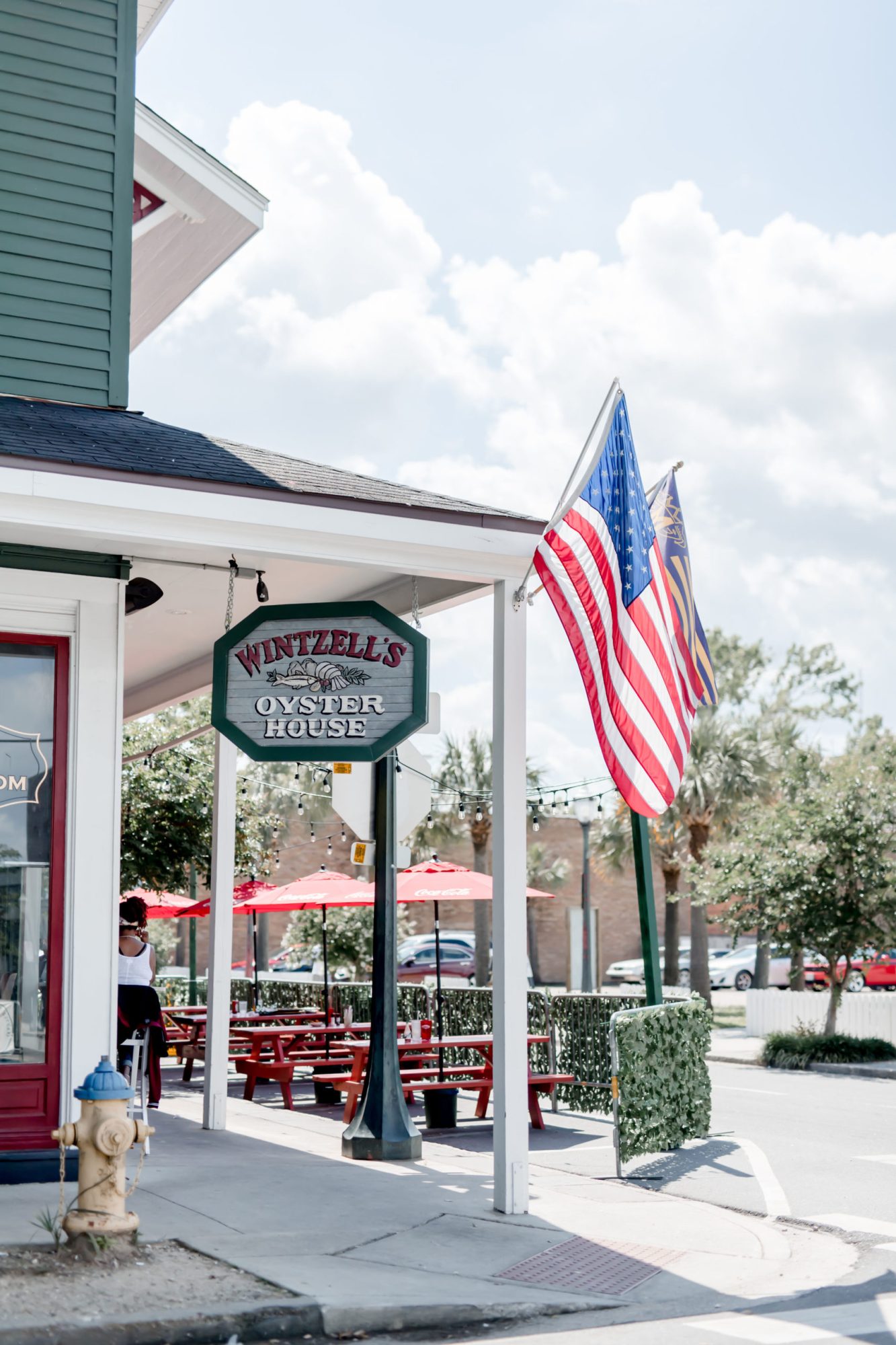
That’s the kind of place Wintzell’s is. The kind of place where the wall is half the menu, where the regulars order their oysters two and three dozen at a time, and where almost ninety years of Mobile history live inside the oldest wood-frame commercial building in the Lower Dauphin Street Historic District.
If you’ve only got time to learn one Mobile restaurant, learn this one.
A Six-Stool Bar in the Middle of the Great Depression
J. Oliver Wintzell opened his original oyster bar in 1938. Six stools. Raw oysters only. Fifteen cents a dozen. Rent on the Dauphin Street space was eight dollars a month, and the landlord threw in the first four months free.
It should not have worked. The country was still climbing out of the Depression. But Wintzell figured out something pretty quickly: it doesn’t matter how broke Mobile gets, Mobilians are going to eat oysters. As he liked to say, oysters here are “fried, stewed and nude.” That phrase still hangs on the wall, and it’s still the right way to order.
Word spread fast. Within a couple of years, Wintzell had bought his own 190-acre oyster reef down at Portersville Bay, about twenty miles south of Mobile. The U.S. Bureau of Fisheries called Portersville oysters the finest in the country. Oliver Wintzell, naturally, agreed.
The Signs on the Wall (All Six Thousand of Them)
If you’ve been inside Wintzell’s, you’ve noticed the walls. Hand-painted sayings, top to bottom, every inch. By the time it was all said and done, there were around six thousand of them, all in J. Oliver Wintzell’s quick-witted style.
The signs started for a very practical reason. Wintzell told a journalist once, “Customers used to ask me a lot of questions. It was hard to answer them and get the oysters opened, so I started the signs to get across some of the information they wanted. Now they keep so busy reading, they don’t ask questions.”
The first sign he ever hung is still behind the bar:
“A man can sometimes get a pearl out of an oyster, but it takes a pretty girl to get a diamond out of an old crab.”
That’s the voice of the place. Equal parts charm and shucked-oyster honesty.
Willie Brown: Forty-Seven Years Behind the Bar
If J. Oliver Wintzell built the place, Willie Brown was the soul of it.
Willie was hired by Mr. Wintzell himself and stood behind that oyster bar for forty-seven years. Generations of Mobilians had their first raw oyster from Willie’s hands. His shucking craft was unmatched. He worked there until he passed away in 2017, and the restaurant did the only thing it could do: they named the oyster bar after him. It’s officially Willie’s Oyster Bar now. There’s a big portrait of him shucking, and a shadowbox with his name tag, his apron, and his shucking knife.
At his funeral, Mobile Mayor Sandy Stimpson wrote a line that nobody around here has forgotten:
“If Mobile is an oyster, Willie was our pearl.”
The Contest
The other tradition that’s been running for decades is the Wintzell’s oyster eating contest.
Here’s how it works. You sit down at the bar. You have one hour. You eat more raw oysters than the current record holder. You win a $25 check and your name on the wall. The $25 has not been adjusted for inflation. Mr. Wintzell would have liked that joke.
Which brings us back to Ken Orndoff. Ken used to come to Mobile for work and bring his clients to Wintzell’s for lunch. One day he saw the record sign. The bar was at 403. He decided he could beat it. So he did. 421 oysters in thirty-four minutes. He made the front page of the Mobile Press Register the next day, and his name is still up on the wall, right where you can see it.
The contest comes around in less expected ways too. Every year, the Distinguished Young Women program is held here in Mobile. A young woman from each state competes for scholarships in talent, fitness, and interview skills. And for five minutes during their week in town, all of that gets set aside, because they have an oyster eating contest at Wintzell’s on the agenda. In 2013, Miss New Mexico, Jimmienell Morgan, set the record for that group by eating eighty raw oysters.
You can probably picture some of the reactions of the other forty-nine.
Why Mobile Is “The Big Oyster”
You can’t really tell the Wintzell’s story without telling the bigger oyster story, because the bigger story starts thousands of years before 1938.
People have been eating oysters from these waters since long before the French ever showed up in 1702. Down on Dauphin Island, Shell Mound Park sits on what is literally the highest point on the island, a mound made entirely of discarded oyster shells and fish bones, twenty feet high in some places, built up over centuries of meals by the Native peoples who lived here. Archaeologists studying remains from the Mobile River basin estimate that around 80 percent of the diet of the people living here came straight out of these waters.
When the French arrived, oysters were so plentiful that Mobilians used them as building material. The shells were burned for lime, mixed with sand and water, and turned into a kind of concrete called tabby. A lot of the first houses in colonial Mobile were either built on or plastered with the same oysters people were eating.
During the Civil War, soldiers said you could run your hand across the bottom of Mobile Bay and just scoop them up.
That kind of abundance had a cost. By 1888, the first year of record, 120 million pounds of oysters were being harvested every year. New dredging technology let workers drag the floor of Mobile Bay and pull up oysters that hand tongs could never reach. A century later, the bay had lost about 98 percent of its native reefs. Journalist Ben Raines estimates that close to 1.8 billion oysters were taken out of Mobile Bay in that century.
The unrestricted harvest ended in 2011. Today, reefs are only opened when they’re healthy enough to support a harvest, and Wintzell’s plays a real part in rebuilding them. Through the Alabama Coastal Foundation, the restaurant recycles the 182,000 pounds of shell it goes through every year. Those shells sit out in the sun for six months while Mother Nature does the cleaning, and then they go back into the water to give the next generation of oysters something to grow on.
It’s a pretty fitting arrangement. The place that built its reputation on oysters is helping put oysters back.
Taste it where the locals do.
Wintzell’s is a stop on the Downtown Mobile Food Tour, and we’ll tell you these stories with a plate in front of you.
What to Order When You Get There
Most people show up the first time wanting raw oysters and that’s exactly right. Order a dozen “nude.” If you’ve never had them, get them on the half shell with a little cocktail sauce, horseradish, and saltine crackers. Out-of-towners, J. Oliver Wintzell used to say, “usually only settle for a dozen.” Locals tend to come in for two or three.
But the menu is much bigger than that now, and a few things deserve attention.
The Gumbo
Wintzell’s gumbo has been named the best in town just about every year by Mobile Bay magazine, the Nappies, and the Taste of Mobile. The trick is they don’t use okra. They use ground sassafras leaves, called file, which gives the gumbo a flavor you can’t quite get anywhere else. It’s a nod to the oldest version of gumbo in Mobile, when file came from the Choctaw and okra had to come up from the West Indies.
The Oyster Sampler
If raw isn’t your thing yet, the sampler is the smart play. The Oysters Monterrey come loaded with bacon, cheddar, and jalapeno. The Oysters Rockefeller are done with spinach and mozzarella. Both will probably ruin you for regular bar food.
The Fried Dill Pickles
Andrew Zimmern came through in 2007 for a Gulf Coast episode of Bizarre Foods and singled out the fried pickles as a “bizarre delicacy.” Mobile thought that was funny. We’ve been eating them forever.
Wintzell’s has fed Willard Scott (who put them in his All-American Cookbook as “The Best Oysters and Crabs”), and they once catered a meal on Air Force One for President George W. Bush and First Lady Laura Bush. So you’re in pretty good company.
Come Taste the Story
There’s a reason Wintzell’s is the very first stop people think of when they think of Mobile food. It’s not just because the oysters are good, though they are. It’s because the place is a living piece of the city. The signs on the wall, Willie’s portrait behind the bar, the names of oyster-eating champions, the fact that the same shells you’re eating off of will go back into the bay to grow the next batch.
Mobile has been called The Big Oyster, and it fits. Oysters have shaped how we eat, how we build, and how we make a living. Wintzell’s is where all of that comes together on one plate.
If you want to hear the rest of these stories the way they’re meant to be told, with a bite of oyster in front of you and a guide who lives this history every day, that’s exactly what we do. Our Downtown Mobile Food Tour stops at Wintzell’s and walks you through the same downtown Mobile that J. Oliver Wintzell opened his six-stool bar in, all the way through the Dauphin Street where Willie Brown shucked for forty-seven years.
It’s the easiest way to eat a few centuries of Mobile in one afternoon.
Frequently Asked Questions
When did Wintzell’s Oyster House open?
Wintzell’s opened in 1938 on Dauphin Street in downtown Mobile. Founder J. Oliver Wintzell started it as a six-stool oyster bar serving raw oysters for fifteen cents a dozen. The original Dauphin Street location is still open today.
Where is Wintzell’s Oyster House in Mobile?
The original Wintzell’s is at 605 Dauphin Street in downtown Mobile, in the oldest wood-frame commercial building in the Lower Dauphin Street Historic District. It is a stop on the Bienville Bites Downtown Mobile Food Tour.
What should I order at Wintzell’s?
Start with a dozen raw oysters on the half shell. If raw is not your speed, order the chargrilled oyster sampler with Monterrey and Rockefeller. The seafood gumbo, made with file instead of okra, has been named the best in Mobile year after year. Save room for the fried dill pickles.
Who was Willie Brown at Wintzell’s?
Willie Brown was the legendary head shucker at Wintzell’s for forty-seven years, hired by J. Oliver Wintzell himself. Generations of Mobilians had their first raw oyster from his hands. After he passed away in 2017, the restaurant renamed the oyster bar Willie’s Oyster Bar in his honor. Mayor Sandy Stimpson wrote at his funeral, “If Mobile is an oyster, Willie was our pearl.”
What is the Wintzell’s oyster eating record?
The all-time record is 421 raw oysters in thirty-four minutes, set on September 11, 2010 by Ken Orndoff of Hoover, Alabama. His name is still on the wall at the bar.
Free Download
More Stories Like This One
7 Iconic Mobile Dishes and the Surprising Stories Behind Them
If you enjoyed the Wintzell’s story, this free guide unpacks seven more iconic Mobile dishes the same way, with the wild histories behind them, from the founder of Bienville Bites and author of A Culinary History of Mobile. Drop your email and it’s yours.
No spam, just good Mobile food stories. Unsubscribe anytime.
Written by Chris Andrews, founder of Bienville Bites Food Tour and author of A Culinary History of Mobile. Chris has been telling the Wintzell’s story to thousands of tour guests since 2017, the year Willie Brown passed.